Fatty Liver Diet: 10 Best Foods for Liver Health and a 7-Day Indian Diet Chart
A well-balanced diet is the main treatment for fatty liver disease, now called metabolic dysfunction-associated steatotic liver disease (MASLD) and earlier known as non-alcoholic fatty liver disease (NAFLD).
In short
There is no single "liver detox" food. What helps a fatty liver is losing extra weight slowly and eating a balanced, mostly plant-based diet.
Key takeaways
- There is no single "liver detox" food. What helps a fatty liver is losing extra weight slowly and eating a balanced, mostly plant-based diet.
- Losing even 5% of body weight reduces liver fat; losing 7–10% or more gives the biggest improvement, including in liver inflammation.
- Helpful foods include leafy vegetables, dals and legumes, whole grains and millets, nuts and seeds, fish, and plain coffee or tea without sugar.
- Cut down on sugar and sweet drinks, maida, fried snacks, excess salt, red and processed meat, and alcohol.
- Do not take herbal "liver cleanse" supplements without asking your doctor; some can damage the liver.
A well-balanced diet is the main treatment for fatty liver disease, now called metabolic dysfunction-associated steatotic liver disease (MASLD) and earlier known as non-alcoholic fatty liver disease (NAFLD). Fatty liver is very common in India, especially in people with obesity, a large waist, type 2 diabetes, high triglycerides or high blood pressure. This guide lists ten foods that support liver health, foods to limit, and a sample 7-day Indian diet chart.
Understanding Fatty Liver Disease (NAFLD / MASLD)
Fatty liver means extra fat has built up inside liver cells. In MASLD this happens in people who do not drink alcohol harmfully and have at least one metabolic risk factor such as excess weight, diabetes or high blood pressure. It has stages:
- Simple fatty liver (steatosis): fat in the liver without significant inflammation. Often found by chance on an ultrasound.
- Steatohepatitis (MASH, earlier NASH): fat with inflammation and liver cell injury.
- Fibrosis and cirrhosis: scarring that can develop over years if inflammation continues.
The good news is that the early stages can improve, and often reverse, with diet, exercise and weight loss. Read more about fatty liver causes, grades and treatment.
Key Dietary Components for Liver Health
Liver specialists generally recommend a Mediterranean-style pattern adapted to Indian food:
- Plenty of vegetables, fruits, dals and whole grains for fibre, which helps blood sugar and weight control.
- Healthier fats: use small amounts of oils such as mustard, groundnut, rice bran or olive oil instead of ghee, butter and vanaspati.
- Enough protein from dals, chana, rajma, soy, paneer or curd in moderation, eggs, fish or chicken.
- Less sugar, especially fructose from sweet drinks, packaged juices and desserts, which the liver turns into fat.
- A gentle calorie deficit if you are overweight: aim to lose about 0.5–1 kg a week, not crash dieting.
Portion guide (plate method): fill half your plate with vegetables or salad, a quarter with protein (dal, chana, paneer, egg, fish or chicken) and a quarter with whole grains (2 medium rotis of whole wheat, millet or multigrain flour, or a small bowl of brown rice). Keep fruit to 1–2 servings a day and eat whole fruit rather than juice.
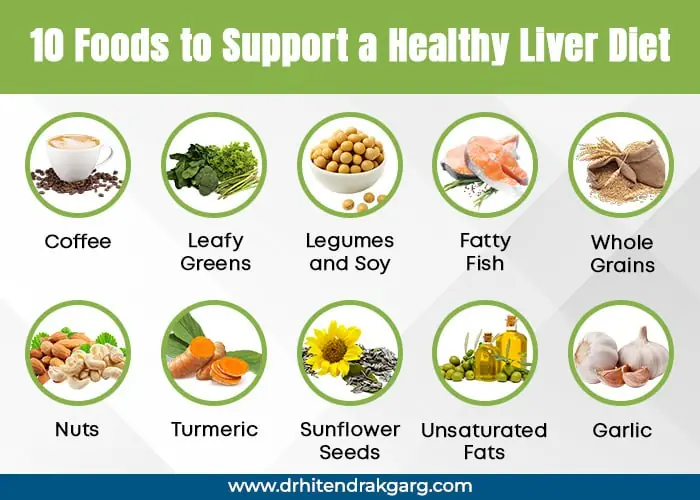
10 Foods to Include in Your Diet
| Food (Hindi name) | Why it helps |
|---|---|
| 1. Coffee, without sugar | Studies link regular coffee drinking with lower liver enzymes and a lower risk of cirrhosis. One to three cups a day of black or low-fat-milk coffee, without sugar or creamer, is reasonable for most adults. |
| 2. Leafy greens (palak, methi, sarson, bathua) | Low in calories and high in fibre, so they help weight control. Cook with little oil. |
| 3. Dals, legumes and soy (moong, masoor, chana, rajma, soybean) | Good vegetarian protein and fibre, which help blood sugar and triglycerides. |
| 4. Fatty fish (rohu, mackerel/bangda, sardine/mathi, salmon) | Contain omega-3 fats. Eat grilled, steamed or in a light curry rather than fried, two times a week if you eat fish. |
| 5. Whole grains and millets (oats, daliya, jau, bajra, jowar, ragi, brown rice) | More fibre and slower sugar release than maida and white rice. |
| 6. Nuts (akhrot, badam) | Healthy fats and protein. A small handful (about 20–30 g) a day, unsalted and not fried. |
| 7. Turmeric (haldi) | Curcumin has shown some benefit on liver tests in small studies. Use it as a spice in food; avoid high-dose supplements unless your doctor advises them. |
| 8. Seeds (surajmukhi ke beej, alsi, chia) | Sunflower seeds are rich in vitamin E; flaxseed adds fibre and omega-3 fats. One to two tablespoons a day. |
| 9. Healthier cooking oils (mustard, groundnut, rice bran, olive) | Replace ghee, butter and vanaspati. Total oil for one person is best kept to 3–4 teaspoons a day. |
| 10. Garlic (lahsun) | Small studies suggest garlic may help reduce liver fat. Use it freely in cooking. |
Foods to Limit or Avoid
| Food | Why |
|---|---|
| Alcohol | Adds direct liver injury on top of fat. If you have fatty liver with fibrosis, avoid it completely. |
| Sugar and sweet drinks (cold drinks, packaged juices, sweetened tea, mithai) | Sugar, especially fructose, is turned into fat by the liver. |
| Fried snacks (samosa, pakora, bhature, namkeen, chips) | High in calories and often in reused or trans fats. |
| Maida and refined carbohydrates (white bread, naan, biscuits, noodles) | Raise blood sugar quickly and add calories without fibre. |
| Excess salt (pickles, papad, packaged foods) | Worsens blood pressure, which often comes with fatty liver; very important to limit if you have cirrhosis. |
| Red and processed meat (mutton, sausages, salami) | High in saturated fat. Prefer fish, chicken, eggs or plant protein. |
| "Liver detox" and herbal supplements | They do not remove liver fat, and some herbal and dietary supplements can cause liver injury. |
Daily Menu for Liver Health
Below is a sample 7-day Indian diet chart for an adult with fatty liver. Adjust portions to your weight goal, and ask your doctor or dietitian to tailor it if you have diabetes, kidney disease or cirrhosis.
| Day | Breakfast | Lunch | Evening snack | Dinner |
|---|---|---|---|---|
| Mon | Vegetable oats upma, unsweetened tea | 2 multigrain rotis, palak dal, cucumber salad | 1 guava | Grilled fish or paneer tikka, sautéed vegetables, 1 roti |
| Tue | Moong dal chilla with mint chutney | Small bowl brown rice, rajma, salad | Roasted chana (a small handful) | Lauki sabzi, mixed dal, 1 bajra roti |
| Wed | Vegetable daliya, black coffee | 2 rotis, mixed vegetable sabzi, curd | Apple and 5–6 almonds | Chicken or soy curry (little oil), salad, 1 roti |
| Thu | 2 boiled eggs or besan chilla, 1 slice whole wheat toast | Jowar roti, methi sabzi, chana dal | Buttermilk (chaas), no sugar | Vegetable khichdi with moong dal, salad |
| Fri | Ragi dosa with sambar | 2 rotis, bhindi sabzi (little oil), dal | Papaya bowl | Grilled fish or tofu, steamed vegetables |
| Sat | Poha with peas and peanuts (small portion) | Brown rice, sambar, cabbage poriyal | Sprouts chaat | Palak paneer (low fat), 1 multigrain roti |
| Sun | Idli (2–3) with sambar | 2 rotis, chole (less oil), salad | Orange and a few walnuts | Clear vegetable soup, chicken or chana salad |
Drink water through the day. Coffee or tea without sugar is fine. Avoid fruit juice and cold drinks.
Additional Lifestyle Recommendations
- Lose weight gradually: a 5% weight loss reduces liver fat, and 7–10% or more gives the biggest improvement in liver inflammation and scarring.
- Stay active: at least 150 minutes a week of brisk walking, cycling or similar exercise, plus some strength exercise twice a week.
- Control diabetes, cholesterol and blood pressure with your doctor, as these drive fatty liver.
- Sleep well and avoid long sitting: stand up and move every hour if you have a desk job.
- Get your liver checked: if you have fatty liver on ultrasound or abnormal liver tests, ask about a fibrosis assessment such as FIB-4 or a FibroScan.
If you have fatty liver with diabetes, abnormal liver tests or signs of scarring, see a liver specialist in Delhi or your nearest hepatologist for a proper assessment.
Frequently Asked Questions
Food is the most powerful treatment for fatty liver. Build your meals around vegetables, dals, whole grains and lean protein, keep sugar, maida, fried food and alcohol low, and aim for slow, steady weight loss. If you have been told you have fatty liver, ask your doctor whether you need a test for liver scarring.

References
- EASL–EASD–EASO Clinical Practice Guidelines on the management of metabolic dysfunction-associated steatotic liver disease (MASLD). J Hepatol. 2024;81(3):492-542. Source
- Duseja A, et al. Indian National Association for Study of the Liver (INASL) guidance paper on nomenclature, diagnosis and treatment of nonalcoholic fatty liver disease (NAFLD). J Clin Exp Hepatol. 2023;13(2):273-302. Source
- Vilar-Gomez E, et al. Weight loss through lifestyle modification significantly reduces features of nonalcoholic steatohepatitis. Gastroenterology. 2015;149(2):367-e5. Source
- Kennedy OJ, et al. Systematic review with meta-analysis: coffee consumption and the risk of cirrhosis. Aliment Pharmacol Ther. 2016;43(5):562-574. Source
Medical disclaimer: This article is for general education and is not a substitute for a consultation. Please see a doctor for advice about your own symptoms. Read our editorial policy.