H. Pylori: The Silent Stomach Infection That 6 Out of 10 Indians Have — But Don't Know About
Most people in India live with these symptoms every single day — and the most common reason is something most of us have never even heard of: H. pylori infection.
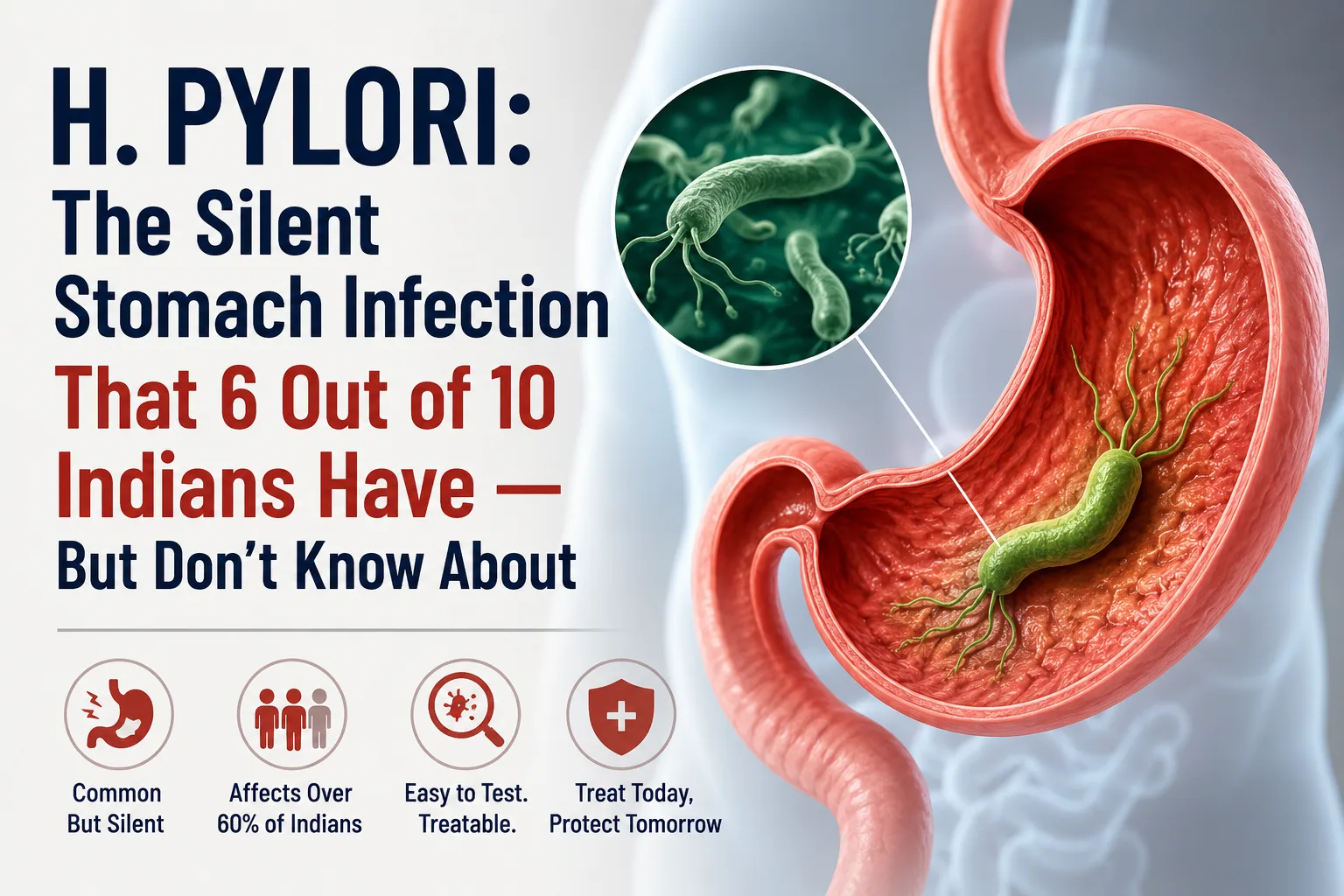
In short
Here's the part that surprises most of my patients: over 60% of Indians carry this bacteria in their stomach right now — and the vast majority have absolutely no idea. They're popping antacids, changing their diet, managing stress — without ever addressing the actual root cause.
By Dr. Hitendra K. Garg | Senior Consultant Gastroenterologist & Hepatologist, Apollo Hospital, New Delhi
Let me ask you something, honestly.
When was the last time your stomach felt completely fine? No bloating after meals. No burning sensation at night. No random cramps that you just brushed off as "gas" or "acidity."
If you're nodding along, you're not alone. Most people in India live with these symptoms every single day — and the most common reason is something most of us have never even heard of: H. pylori infection.
Here's the part that surprises most of my patients: over 60% of Indians carry this bacteria in their stomach right now — and the vast majority have absolutely no idea. They're popping antacids, changing their diet, managing stress — without ever addressing the actual root cause.
Let's change that today.
What Exactly Is H. Pylori?
Helicobacter pylori (H. pylori) is a type of bacteria that lives and thrives in the lining of your stomach. It's not a new discovery — scientists have known about it for decades. In fact, the doctors who identified it won the Nobel Prize in Medicine in 2005.
What makes H. pylori so tricky is the way it survives. Your stomach is highly acidic — most bacteria can't last a minute in there. But H. pylori is different. It produces an enzyme called urease, which neutralizes the acid around it, creating a comfortable little bubble where it can live for years — sometimes your entire lifetime — without you ever knowing.
Over time, this bacteria slowly damages the protective mucus lining of your stomach. When that lining weakens, stomach acid begins to irritate the raw tissue underneath. That's when things start to go wrong.
How Common Is H. Pylori in India — And Why Is It So Widespread?
India has one of the highest rates of H. pylori infection in the world. A 2025 meta-analysis of studies across 15 Indian states found that over 54% of people with gastrointestinal symptoms tested positive for H. pylori, and in some states like Rajasthan, that number climbs as high as 70%.
A more recent 2026 gut health survey found something even more alarming: of Indians who underwent endoscopy, 62% tested positive for H. pylori, yet only about 1.4% of people surveyed even knew they had the infection.
Think about that. A 44x gap between who actually has it and who knows about it.
The reason H. pylori spreads so easily in India comes down to a few key factors:
- Contaminated water and food — H. pylori spreads through the fecal-oral route, meaning it can be picked up from contaminated water, unwashed vegetables, or street food prepared in unhygienic conditions
- Crowded living conditions — The bacteria also spread through saliva (oral-oral route), so shared utensils, kissing, or even close household contact can pass it on
- Childhood exposure — Most people who have H. pylori actually picked it up as children, and it has quietly stayed with them ever since
- Low awareness and delayed diagnosis — Because symptoms are vague and often dismissed as "normal" acidity, many people go years without being tested
What Are the Symptoms of H. Pylori Infection?
This is where H. pylori becomes genuinely dangerous — because most people don't have obvious symptoms at all.
When symptoms do show up, they're easy to mistake for everyday digestive problems. Here's what to watch for:
Common symptoms:
- A dull, burning, or gnawing pain in the upper abdomen (especially when your stomach is empty)
- Persistent bloating after meals
- Frequent burping
- Nausea, especially in the morning
- Loss of appetite
- Feeling full very quickly even after eating small portions
- Unexplained weight loss
Warning signs that need immediate attention:
- Dark, black, or tarry stools (this can indicate internal bleeding from an ulcer)
- Vomiting blood or material that looks like coffee grounds
- Severe, sudden stomach pain that doesn't ease up
- Extreme fatigue or dizziness without a clear reason
If you've been experiencing chronic stomach discomfort for weeks — even mild discomfort you've normalized — please don't ignore it.
What Can H. Pylori Lead To If Left Untreated?
This is the part I want people to really understand. H. pylori isn't just a "stomach bug" that causes minor discomfort. Left untreated for months or years, it can lead to serious, life-altering conditions. H. pylori is a common cause of gastritis and ulcers, while frequent heartburn is more often due to GERD.
1. Peptic Ulcers
H. pylori is the single most common cause of peptic ulcers — painful open sores that form in the lining of your stomach or the upper part of your small intestine. About 10–15% of people with untreated H. pylori will develop an ulcer. Ulcers can bleed, perforate the stomach wall, or cause dangerous obstructions — all of which are medical emergencies.
2. Chronic Gastritis
Long-term H. pylori infection causes persistent inflammation of the stomach lining, a condition called chronic gastritis. This leads to ongoing discomfort, impaired digestion, and over time, permanent thinning of the stomach lining (atrophic gastritis).
3. Stomach Cancer
Yes — H. pylori is classified by the World Health Organization as a Group 1 carcinogen, meaning it is a known cause of cancer in humans. People with chronic H. pylori infection have a significantly higher risk of developing gastric adenocarcinoma (stomach cancer). Research has shown that treating and eradicating H. pylori can reduce the risk of stomach cancer by nearly 50% over time.
This doesn't mean everyone with H. pylori will get cancer — the vast majority won't. But it does mean this is an infection worth taking seriously and treating proactively.
How Is H. Pylori Diagnosed?
The good news: H. pylori is completely diagnosable. There are several ways to test for it:
Non-invasive tests:
- Urea Breath Test (UBT) — One of the most accurate non-invasive tests. You swallow a capsule containing urea; if H. pylori is present, it breaks the urea down and produces CO₂ that can be measured in your breath
- Stool Antigen Test — A simple stool sample test that detects H. pylori proteins. Very reliable and easy to do
- Blood Antibody Test — Can detect past or present infection, though it can't confirm whether the infection is currently active
Invasive (when endoscopy is done):
- Rapid Urease Test (RUT) — During an upper GI endoscopy, a small tissue sample is taken from the stomach lining and tested for H. pylori on the spot
- Biopsy and culture — The sample is examined under a microscope for the bacteria
At my clinic, I generally recommend a combination of clinical history and targeted testing based on each patient's symptoms. If you're already undergoing an endoscopy for any reason, testing for H. pylori simultaneously makes complete sense.
How Is H. Pylori Treated?
Here's genuinely reassuring news: H. pylori is treatable and curable in the vast majority of cases.
The standard treatment is called Triple Therapy — a combination of:
- Two antibiotics (typically Amoxicillin + Clarithromycin, or alternatives based on resistance patterns)
- One Proton Pump Inhibitor (PPI) to reduce stomach acid and allow the stomach lining to heal
This course of treatment is typically completed in 10–14 days. After treatment, a follow-up test (usually a breath test or stool antigen test) is done about 4–6 weeks later to confirm the infection has been fully cleared.
One important point: complete the full course of antibiotics, even if you start feeling better midway. Incomplete treatment is one of the main reasons H. pylori becomes antibiotic-resistant and harder to treat the second time around.
Who Should Get Tested for H. Pylori?
You should speak to a gastroenterologist about H. pylori testing if:
- You have frequent stomach pain, burning, or bloating that doesn't improve with antacids
- You've been diagnosed with a peptic ulcer (or have had one in the past)
- You have a family history of stomach cancer
- You experience unexplained nausea, loss of appetite, or weight loss
- You've been taking antacids or PPIs long-term without a clear diagnosis
- You have iron deficiency anemia with no obvious explanation (H. pylori can interfere with iron absorption)
In many Western countries, doctors follow a "test and treat" strategy — meaning if you have persistent dyspepsia (indigestion), you get tested for H. pylori first before any further workup. I believe this approach should be more widely adopted in India, given our high prevalence rates.
Simple Habits That Reduce Your Risk
While H. pylori can be cured with medication, prevention is always better. Some practical steps that help:
- Wash your hands thoroughly before eating and after using the bathroom — this alone significantly reduces transmission
- Drink clean, filtered, or boiled water — especially when traveling or in areas with uncertain water quality
- Avoid sharing utensils, drinking glasses, or food from someone who may be infected
- Eat freshly prepared, properly cooked food — and be mindful of hygiene when eating street food
- A diet rich in fruits, vegetables, and whole grains has been associated with lower H. pylori colonization and better gut health overall
A Note from Dr. Garg
In my 18+ years of practice at Apollo Hospital, I've seen countless patients come in with months — sometimes years — of stomach discomfort that turned out to be H. pylori. The moment we identify it, treat it, and confirm eradication, their quality of life transforms.
The tragedy is how many people quietly suffer, self-medicate with antacids, or simply accept stomach pain as part of their daily routine. It doesn't have to be that way.
If you've been living with unexplained stomach symptoms, please don't dismiss them. A simple test could give you the answer — and the treatment could genuinely change how you feel every single day.
Frequently Asked Questions
When to See a Gastroenterologist
Don't wait for symptoms to become unbearable. Please consult a gastroenterologist if:
- Stomach pain, bloating, or nausea has lasted more than 2–3 weeks
- Antacids and home remedies aren't providing lasting relief
- You notice blood in your stool or unexplained weight loss
- You have a family history of stomach ulcers or gastric cancer
Early detection makes treatment simpler, faster, and far more effective.
Dr. Hitendra K. Garg is a Senior Consultant Gastroenterologist, Hepatologist, and Therapeutic Endoscopist at Indraprastha Apollo Hospital, New Delhi. With over 18 years of experience and 20+ published research papers, he specializes in comprehensive digestive and liver care.
📞 Book an appointment: +91 89206 32657 | +91 89203 61841
🌐 www.drhitendrakgarg.com

Medical disclaimer: This article is for general education and is not a substitute for a consultation. Please see a doctor for advice about your own symptoms. Read our editorial policy.