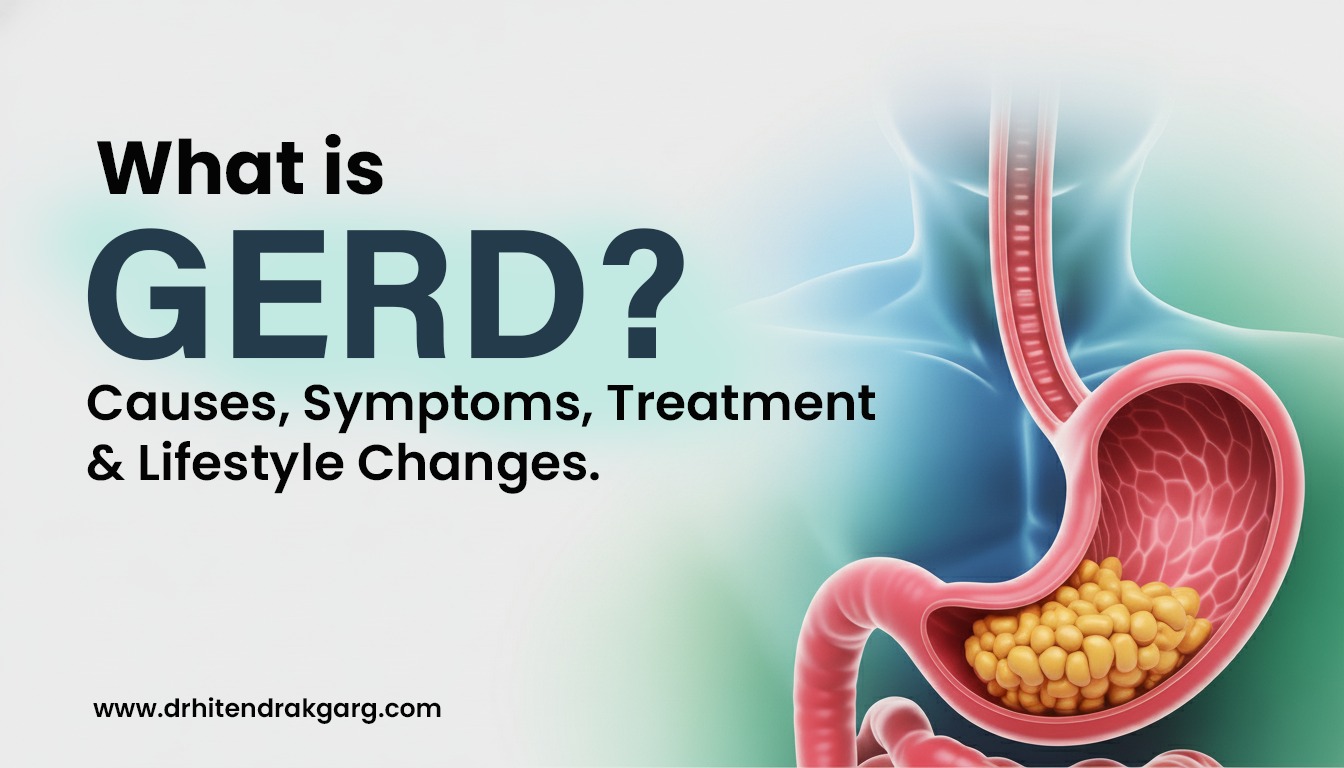

If you often feel a burning sensation in your chest after meals, a sour taste in your mouth, or discomfort that worsens at night, you are not alone. Many people experience these symptoms and assume it is just normal acidity. In reality, it could be GERD, a condition that needs proper attention and care.
GERD is common, manageable, and often misunderstood. This blog explains what GERD really is, why it happens, how to recognize it early, and what you can do in daily life to keep it under control.
What Is GERD?
GERD (Gastroesophageal Reflux Disease) is a chronic digestive condition in which stomach acid repeatedly flows back into the food pipe (esophagus). This backflow of acid irritates the inner lining of the esophagus and leads to symptoms like heartburn and regurgitation.
Occasional acid reflux can happen to anyone, especially after heavy or spicy meals. GERD is diagnosed when reflux becomes frequent, persistent, or starts affecting daily life.
Why Does GERD Happen?
GERD usually occurs due to a problem with a muscle called the lower esophageal sphincter (LES). This muscle acts like a valve between the stomach and the food pipe. When it becomes weak or relaxes at the wrong time, acid can travel upward instead of staying in the stomach.
Common reasons behind GERD include:
- Weak or relaxed lower esophageal sphincter
- Eating large meals or eating very late at night
- Excess body weight or abdominal obesity
- Pregnancy
- Smoking and alcohol intake
- Frequent consumption of spicy, fried, or fatty foods
- Certain medications such as painkillers or blood pressure drugs
- Hiatal hernia
Often, GERD develops due to a combination of lifestyle habits rather than a single cause.
Common Symptoms of GERD
GERD symptoms may vary in intensity from person to person. The most commonly reported symptoms include:
- Burning sensation in the chest (heartburn)
- Sour or bitter taste in the mouth
- Acid coming back into the throat
- Chest discomfort that may mimic heart pain
- Difficulty or discomfort while swallowing
- Chronic cough or frequent throat clearing
- Hoarseness or voice changes
- A feeling of something stuck in the throat
Many people notice that symptoms worsen at night or after lying down, especially after late dinners.
How Is GERD Diagnosed?
In most cases, GERD can be diagnosed based on symptoms and clinical history. However, if symptoms are severe, persistent, or not responding to treatment, further tests may be advised.
These may include:
- Upper gastrointestinal endoscopy
- Esophageal pH monitoring
- Esophageal manometry
- Barium swallow study
These tests help assess the severity of reflux and rule out complications.
Treatment Options for GERD
GERD treatment focuses on reducing acid reflux, healing the esophagus, and preventing recurrence.
Lifestyle Changes
For many patients, simple lifestyle adjustments can make a noticeable difference and may even reduce the need for long-term medication.
Medications
When lifestyle changes are not enough, medicines may be prescribed, such as:
- Antacids for quick symptom relief
- H2 receptor blockers
- Proton pump inhibitors (PPIs) like pantoprazole or omeprazole
Medicines should always be taken under medical guidance, especially if symptoms persist.
Surgical Treatment
In selected cases where symptoms do not improve with medicines and lifestyle measures, anti-reflux surgery may be considered.
Lifestyle Changes That Help Control GERD
Small, consistent changes in daily habits can significantly reduce GERD symptoms:
- Eat smaller meals instead of large portions
- Avoid lying down immediately after eating
- Finish dinner at least 2 to 3 hours before bedtime
- Raise the head end of the bed slightly
- Maintain a healthy body weight
- Identify and avoid trigger foods
- Quit smoking and limit alcohol consumption
- Wear loose-fitting clothes around the abdomen
These habits, when followed regularly, often provide long-term relief.
GERD Diet: What to Eat and What to Avoid
Foods That May Help Reduce Symptoms
- Oatmeal and whole grains
- Bananas and other non-citrus fruits
- Green vegetables
- Low-fat dairy products
- Lean sources of protein
Foods That Commonly Trigger GERD
- Spicy and fried foods
- Citrus fruits
- Tomatoes and tomato-based foods
- Chocolate and peppermint
- Carbonated and caffeinated drinks
Trigger foods can differ from person to person, so personal observation is important.
What Happens If GERD Is Ignored?
When GERD is left untreated for long periods, it can lead to complications such as:
- Inflammation of the esophagus (esophagitis)
- Narrowing of the food pipe (strictures)
- Barrett’s esophagus
- Increased risk of esophageal cancer
Early diagnosis and timely treatment greatly reduce these risks.
When Should You See a Gastroenterologist?
You should seek medical advice if:
- Heartburn occurs more than twice a week
- Symptoms persist despite medication
- You experience difficulty swallowing
- There is unexplained weight loss
- Chest pain is frequent or severe